
250 Years of Independence: The Legacy of Paul Revere
This exhibit was created during the 250th anniversary of the Declaration of Independence, to explore how the legacy of one of America’s most revered heroes has been interpreted throughout the past two and a half centuries of our country’s history. These objects from our collection illustrate how the Midnight Ride has been commemorated in music, art, memorabilia, and advertising, and how Paul Revere has been used as a symbol of American values by artists, charitable organizations, government bodies, corporations, and sports teams alike.
The labels for this exhibit were written by interns in the Paul Revere House’s 2026 High School Internship Summer Program.
The images in this post are gallery-style. Please click on an image to enlarge it!
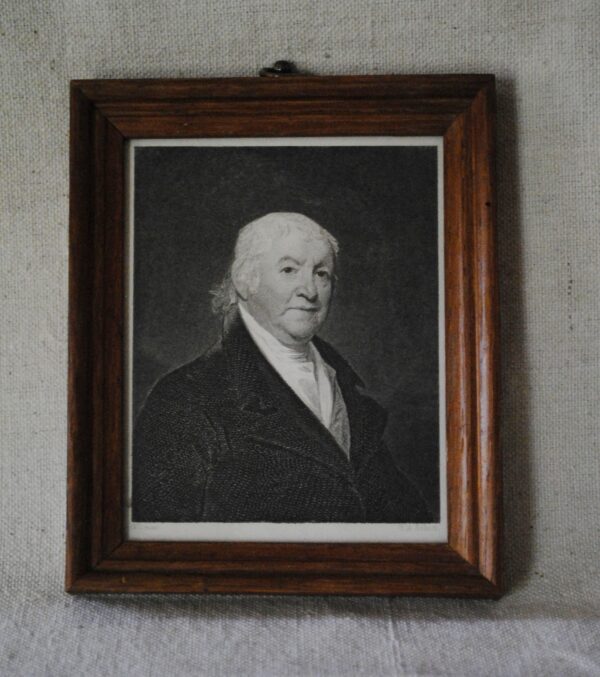
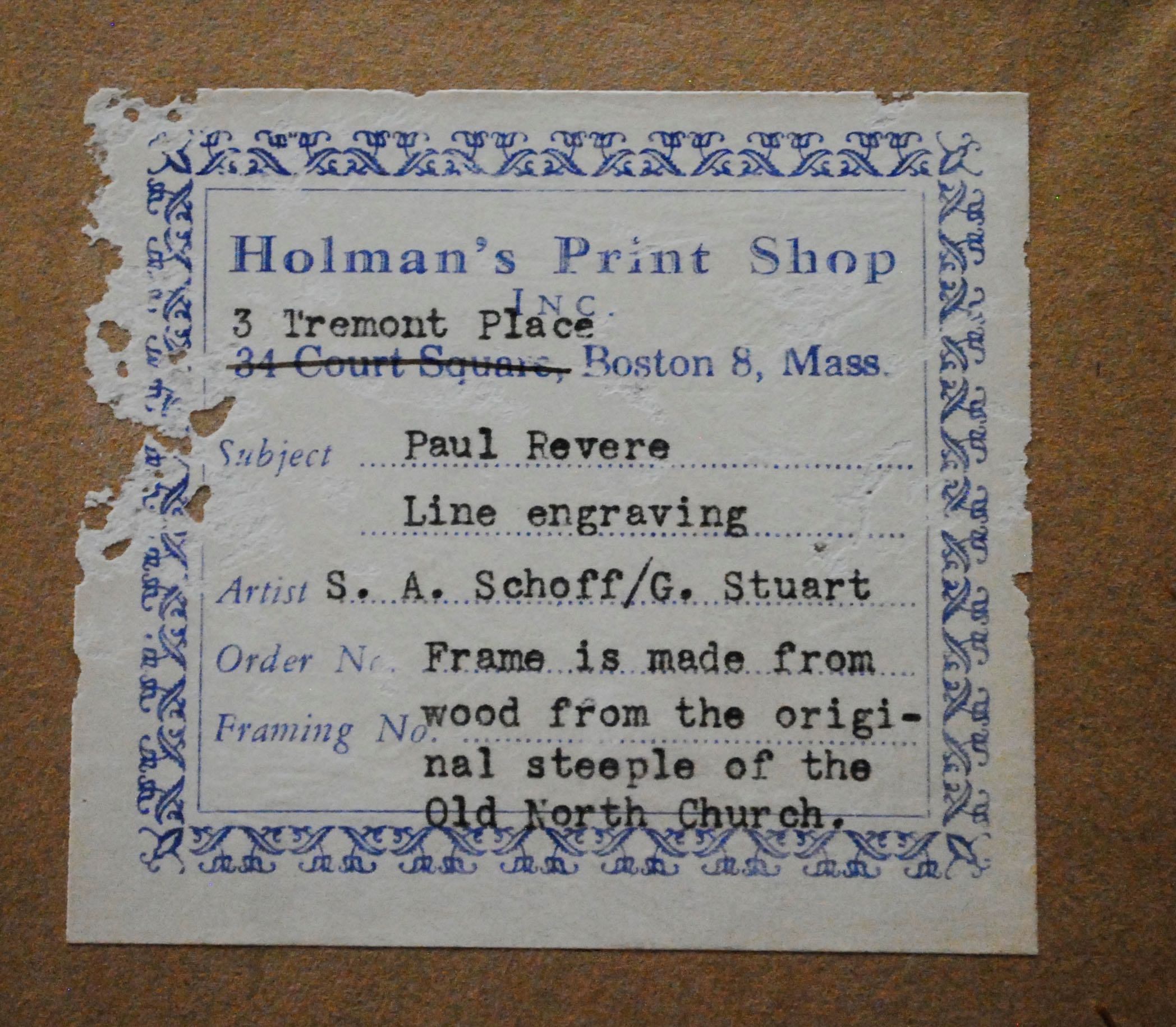
Paul Revere Line Engraving by Stephen Alonso Schoff
c. late 19th century
This line engraving was modeled after Gilbert Stuart’s 1813 portrait of Paul Revere. The Stuart portrait was commissioned by Paul and Rachel Revere’s son Joseph Warren Revere five years before Paul Revere’s death. Line engravings are images originally engraved onto a sheet of metal, then printed onto paper. They were generally done as illustrations for books and magazines, or as reproductions of paintings like this one. Stephen Alonso Schoff created other line engravings of several renowned authors and Bostonians, including George Eliot, Henry Wadsworth Longfellow, and Walt Whitman. The Art Institute of Chicago holds another version of Schoff’s line engraving of Revere. The frame of this line engraving was made from the wood of the original steeple of the Old North Church. That steeple was erected in 1740 but collapsed after a “very violent gale” in 1804. However, not much is known about how Schoff gained inspiration to create this line engraving and how the wood for the frame was acquired.
Gift of Jonathan Fairbanks for the Joan Pearson Watkins Trust
Label by: Seth Min-Yong Kim
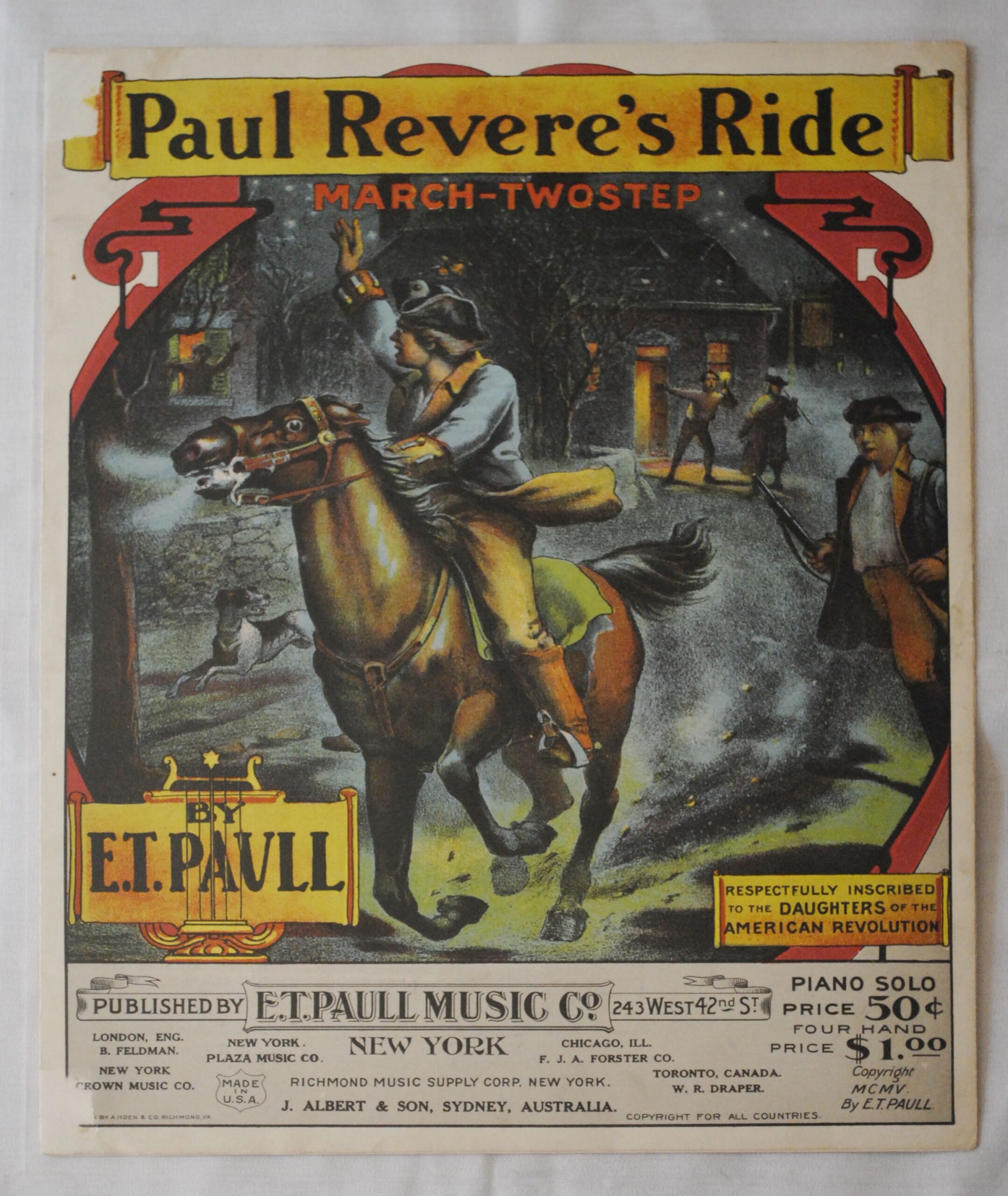
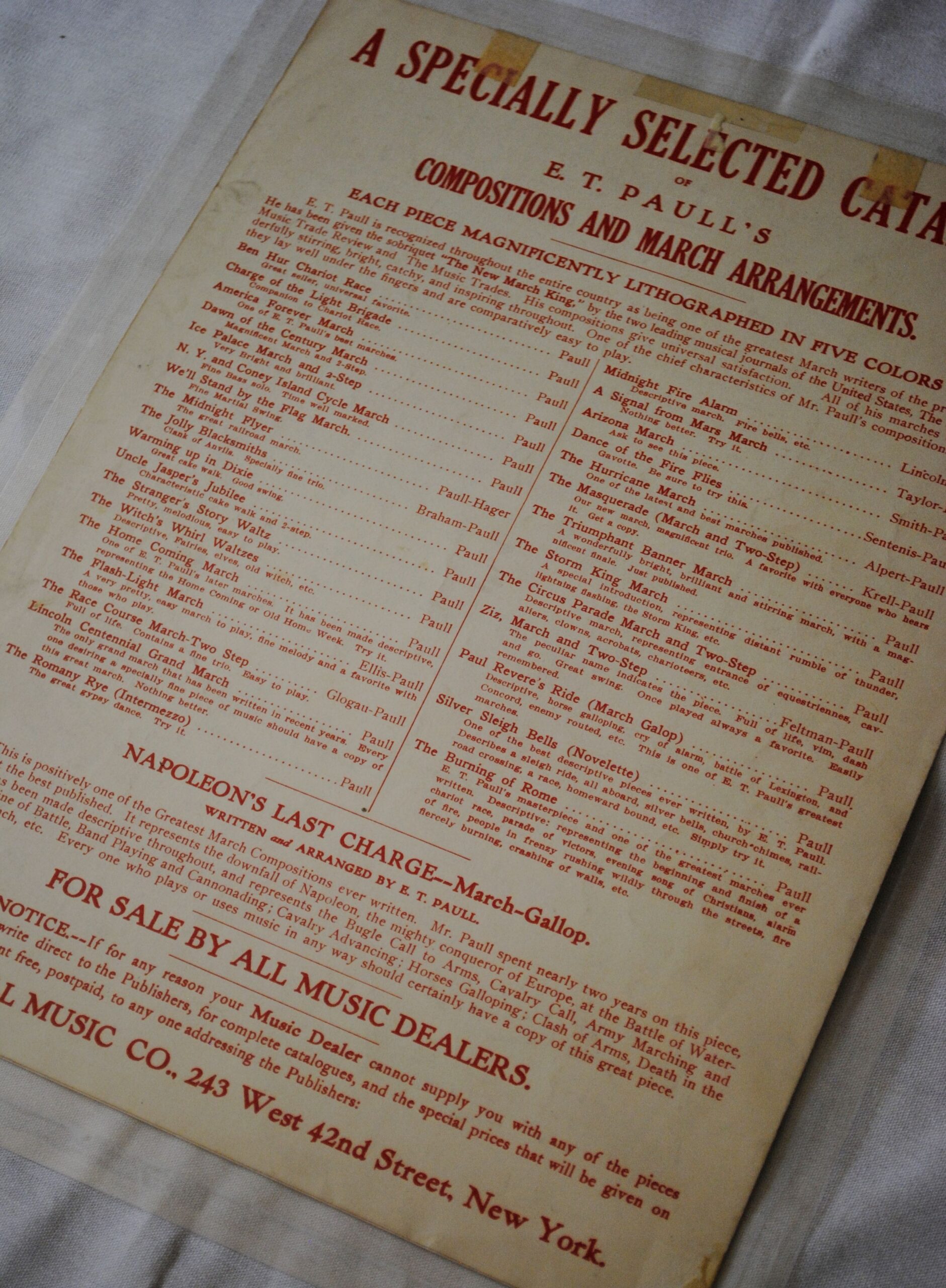
“Paul Revere’s Ride: March-Twostep” by E.T. Paull
1905
On the inside cover of this composition, Edward Taylor Paull described Paul Revere’s Midnight Ride as the “greatest ride ever made in the history of the world.” E.T. Paull was a well-known American composer who began composing in 1894. He is most well known for creating march-style music with steady rhythms meant to keep soldiers in step. One of Paull’s most popular compositions was this piece, “Paul Revere’s Ride: March-Twostep,” inspired by Henry Wadsworth Longfellow’s famous poem sharing the same name. The poem transformed Paul Revere into one of the most famous heroes of the Revolution. Paull was also one of the first composers to experiment with colorful covers to attract buyers. The piece begins with Revere galloping through the night and then moves to him yelling for the Minutemen to assemble. The piece shifts to a darker mood during the Battle of Lexington and Concord, allowing the listener to hear the crack of gunshots. At the end, the piece reaches its crescendo while the Minutemen are celebrating after the battle.
Label by: Nathaniel Paul Newmark
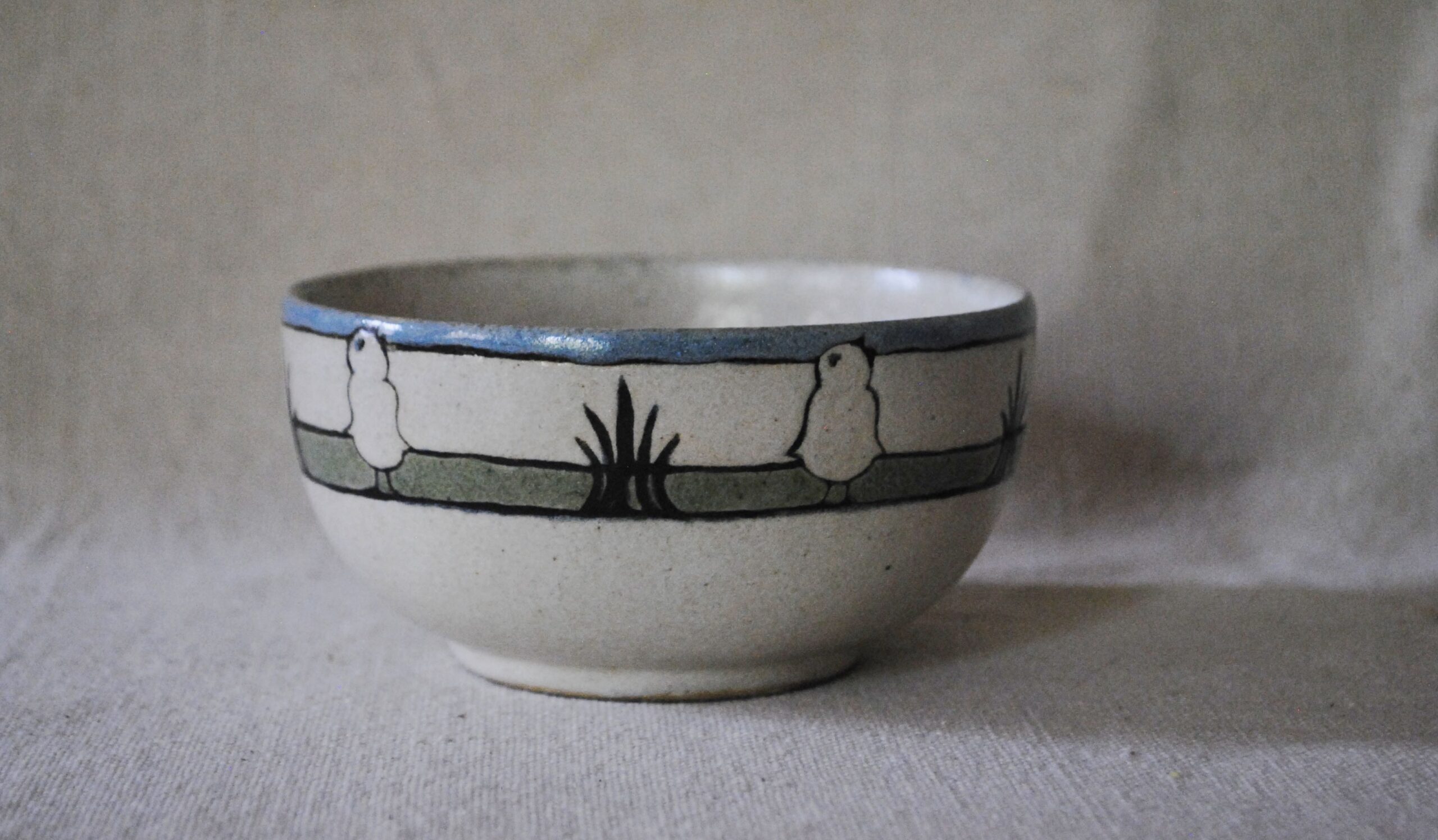
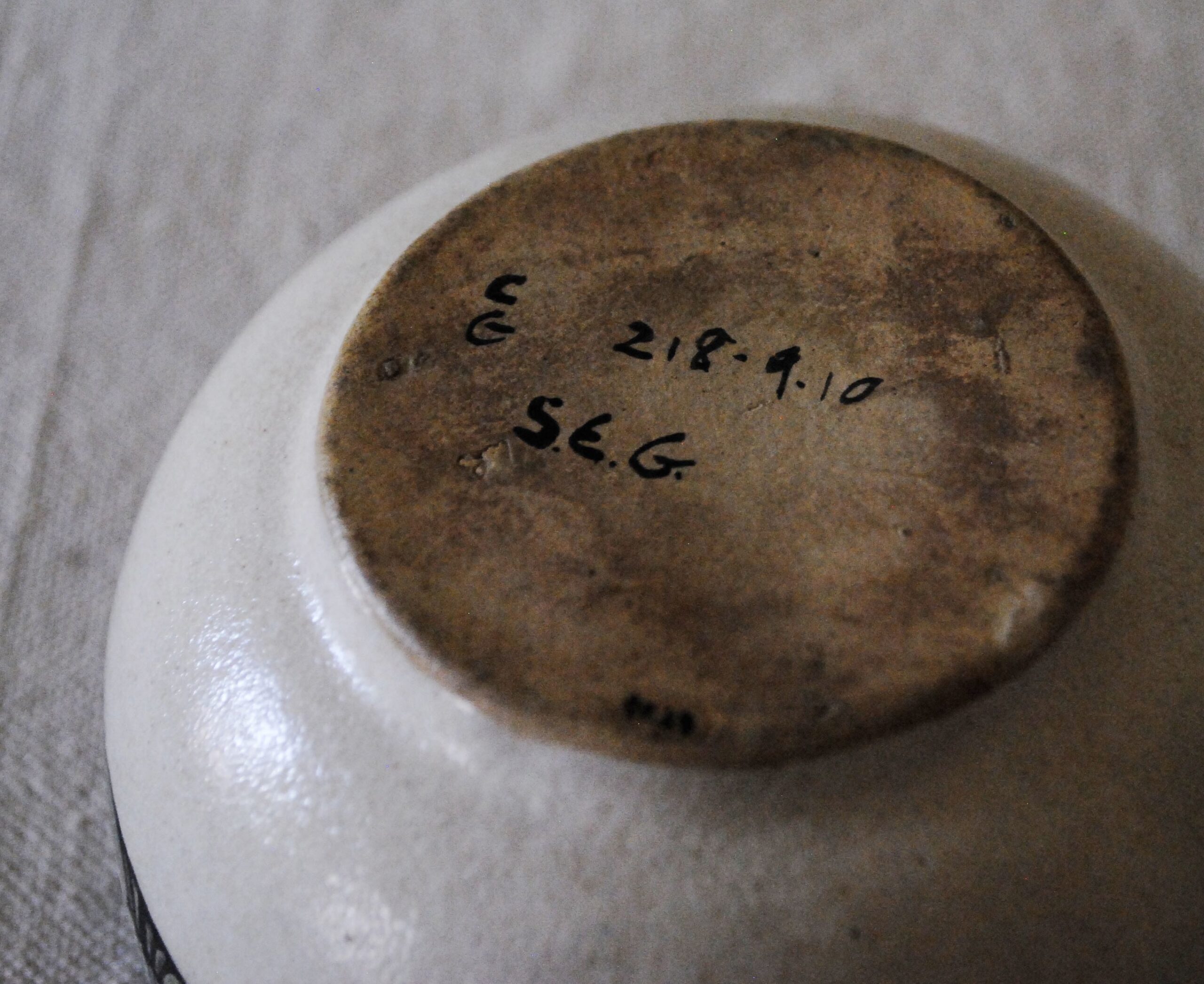
Bowl (Paul Revere Pottery; decorated by Celia Goodman)
September 1910
Glazed earthenware
The Paul Revere Pottery was created as an extension of the Saturday Evening Girls Club, an organization meant to educate young immigrant women. This pottery was established in 1908 in Boston’s North End with the aim of teaching these women a trade and providing them with a source of income. Its founders were inspired by the Arts and Crafts movement, which championed quality crafts made under healthy conditions. The decorator of this bowl, Celia Goodman, seemed to have benefited from the communal and educational opportunities provided by the organization, as seen in a poem she wrote emphasizing the friendships formed at the pottery.
While the artists of the pottery were mainly women of Italian and Eastern European Jewish descent, the name of the pottery (chosen due to its proximity to the Paul Revere House and Old North Church) marks their work as distinctly American. In doing so, this piece contrasts the North End’s history of immigration and Revere’s French identity with his image as a national icon. As they worked in one of the few art forms considered respectable for women at the time, women like Goodman carved out an identity for themselves in a world that often denied them opportunities.
Purchased from the JMW Gallery, 1997
Label by: Gal Shapira
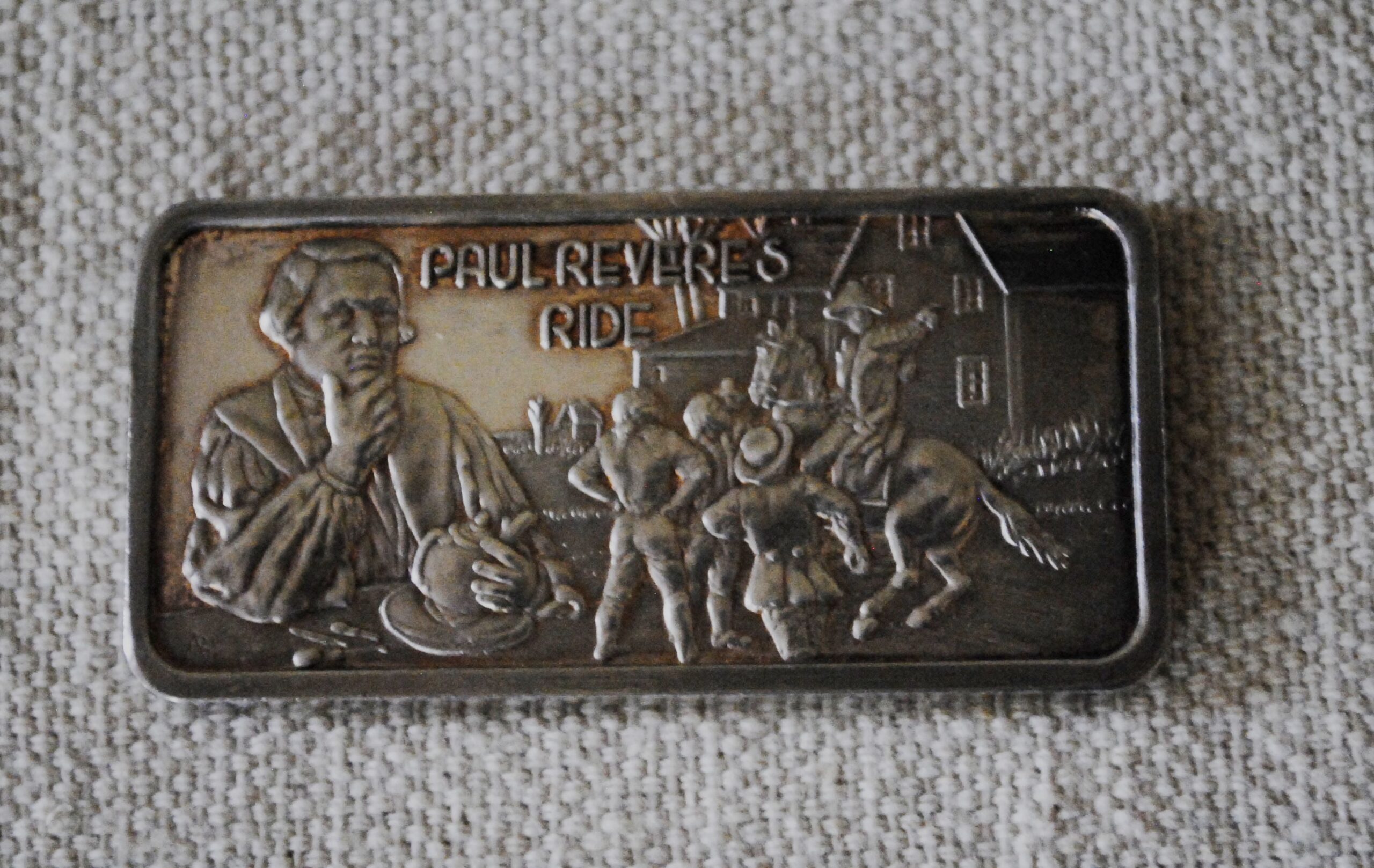
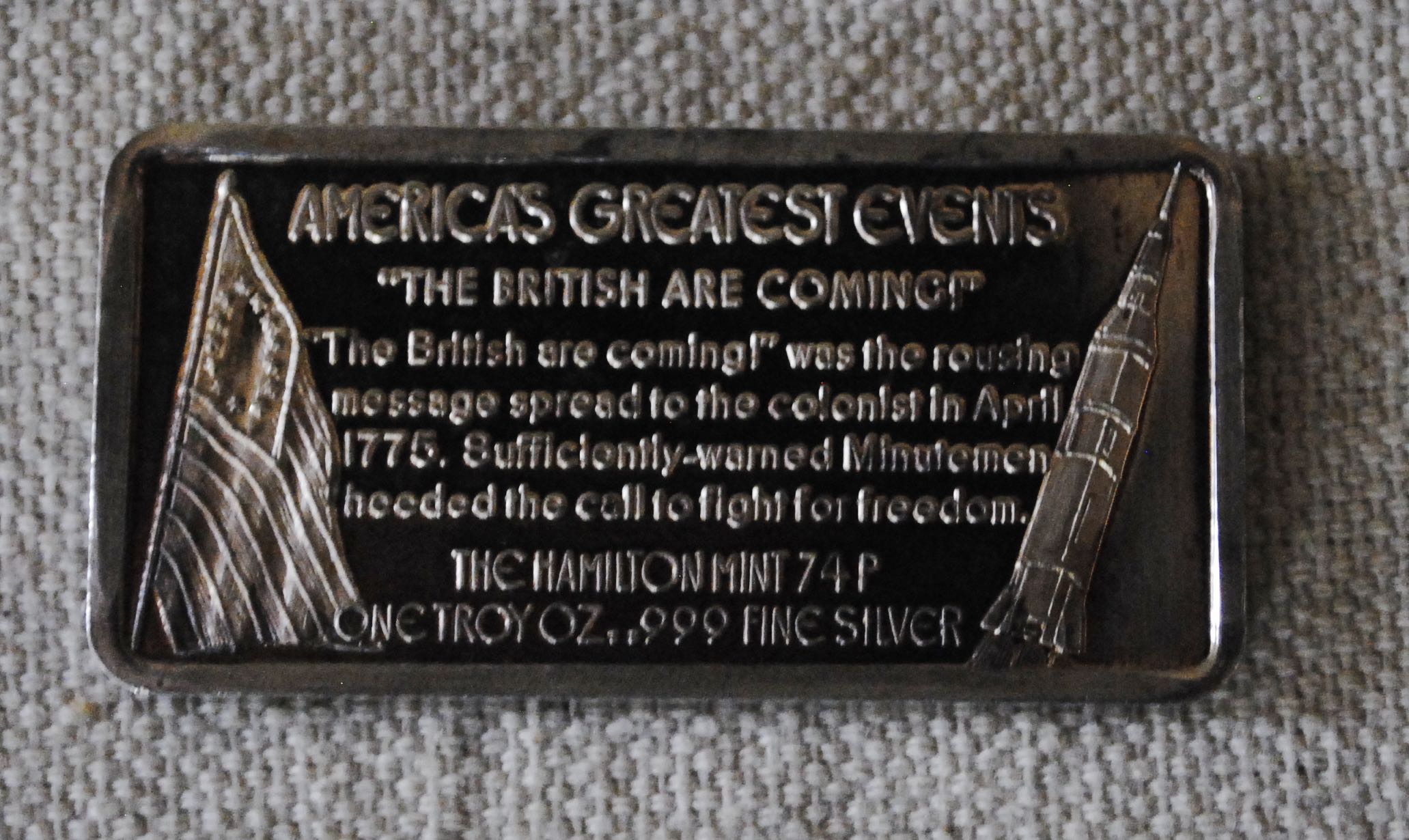
Silver Bar by Hamilton Mint
1974-1976
1 Troy oz. of .999 fine silver
This silver bar features a picture of Paul Revere, modeled after his famous 1768 portrait at 33 years old by John Singleton Copley, alongside a depiction of him on horseback warning those around him. On the back of the bar there is a description of his ride alongside a flag of the 16 colonies and a space ship. This piece is part of a collection of commemorative silver bars minted around the time of the bicentennial, featuring “America’s Greatest Events.”
Donated 1999
Label by: Tei Hernandez-Day
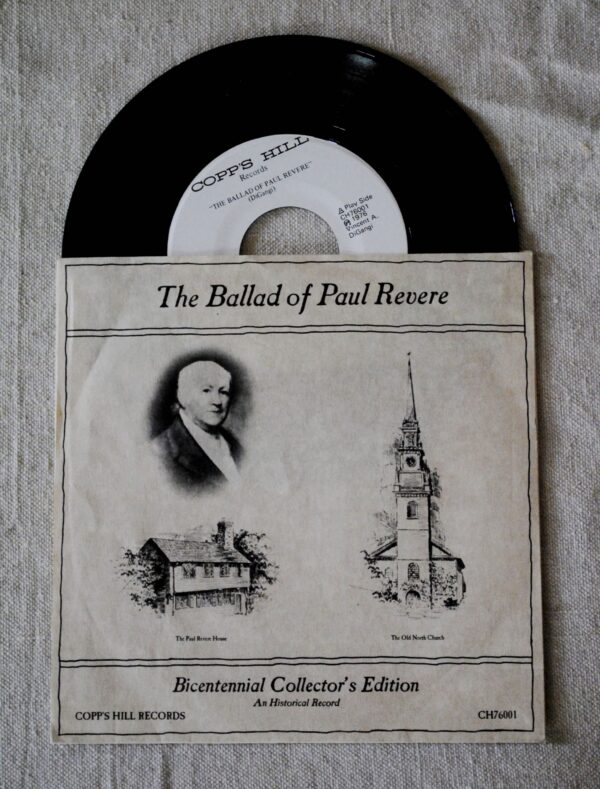
“The Ballad of Paul Revere”: A Bicentennial Original / Vincent A. DiGangi, Copps Hill Records
1976
Originally recorded and produced by Copps Hill Records, “The Ballad of Paul Revere” was written as a celebratory anthem for the United States Bicentennial. This limited-edition record was acquired directly from the original singer, Vincent A. DiGangi, in 1976. DiGangi worked as a local tour guide in Boston’s North End during the 1940s. When the Bicentennial celebration approached, he realized that writing a song about the legendary myth of Paul Revere would be an excellent way to earn some extra money. He collaborated with his daughter and eventually sold the song to Copps Hill Records. In the end, about 3,000 copies were sold locally. The song never reached mainstream popularity, so finding streaming platforms that feature it is virtually impossible. Today, the only surviving copies of the song are the few physical records that still exist.
Donated by Vincent A. DiGangi, 1976
Label by: Kimberly DeRosa
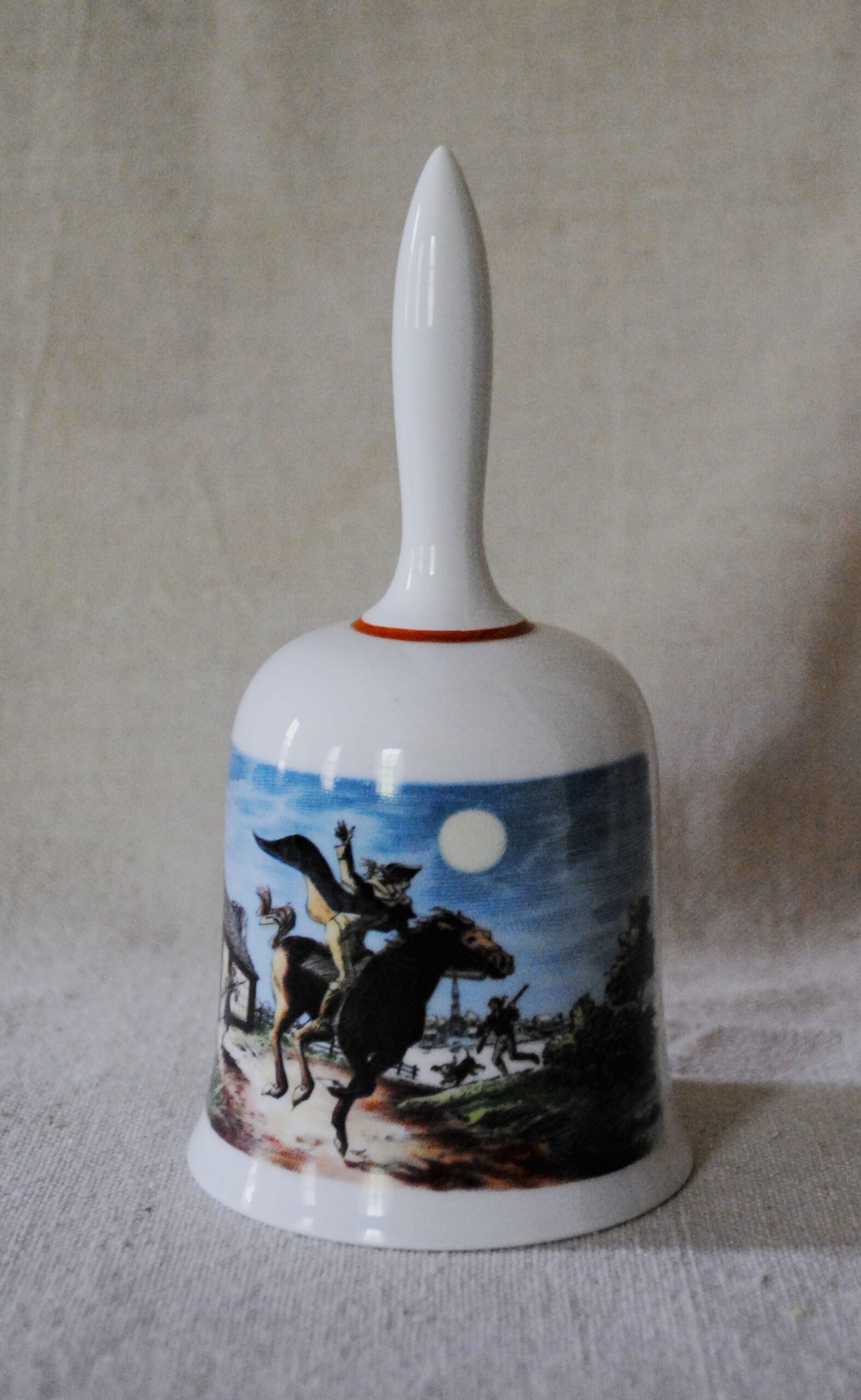
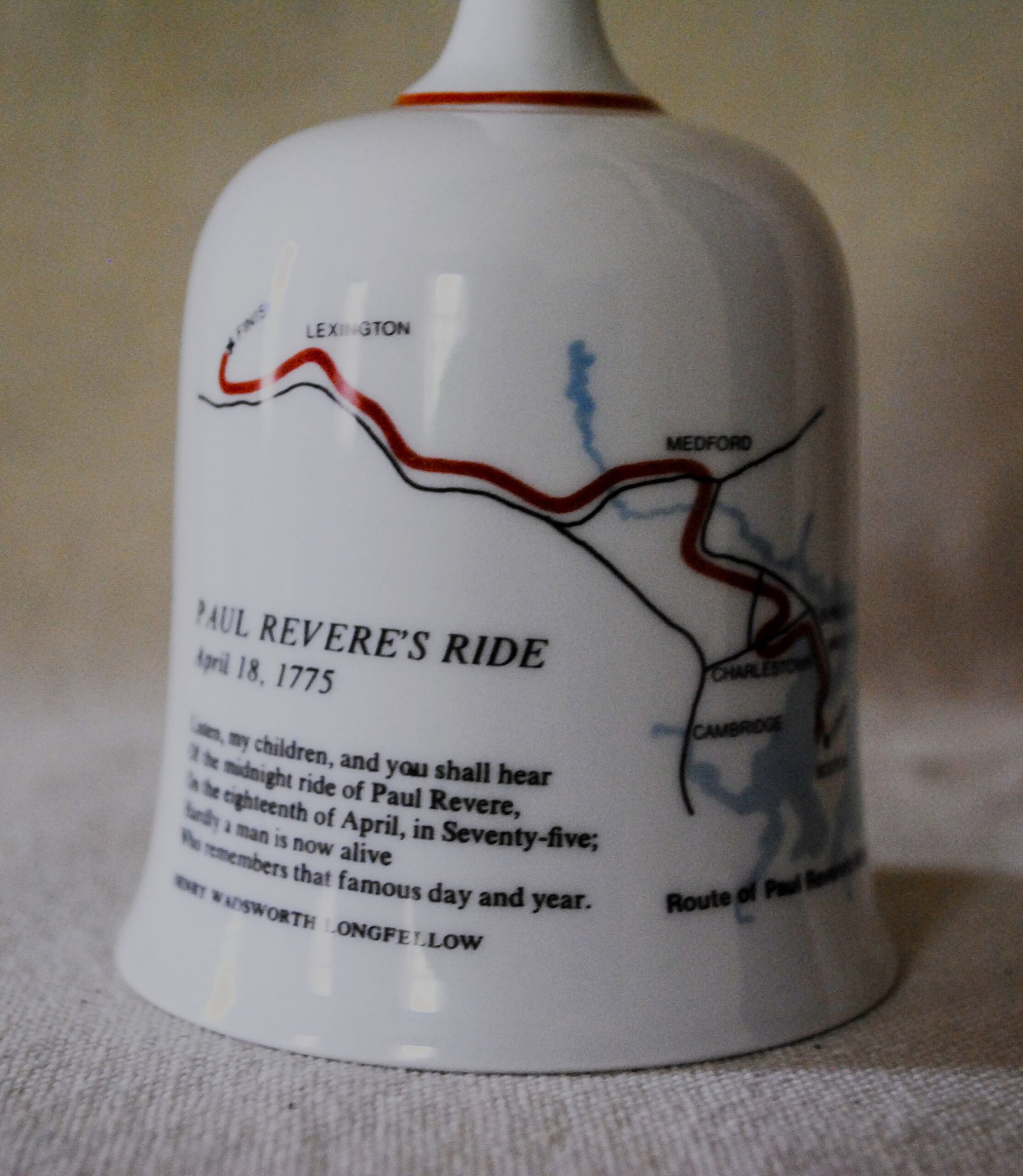
Commemorative Bell, Danbury Mint
c. 1976
This ceramic commemorative bell remembering Paul Revere’s Midnight Ride was created for America’s Bicentennial in 1976. Produced in West Germany by Danbury Mint, this artifact found its way into an antique shop in Maryland, where it was purchased and then donated to the museum. The bell features an artistic interpretation of Revere’s ride on one side, as well as a map of the route he rode on the other. One additional feature of the bell is the opening verse of the poem that made Revere a national icon, Henry Wadsworth Longfellow’s “Paul Revere’s Ride,” located by the map of the ride.
Donated by Nina Zannieri, 1998
Label by: Daniel Christopher Chen
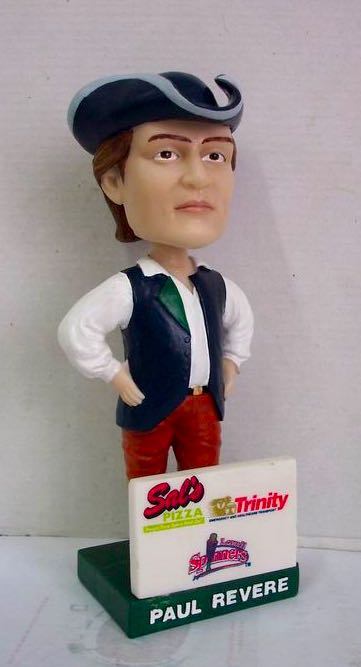
Paul Revere Bobblehead from Promotional Adventures & Lowell Spinners
c.. 2005
This 2005 plastic-resin bobblehead was produced by the merchandising company Promotional Adventures in Xiamen, China, for the then Red Sox Class-A affiliate Lowell Spinners. Examples were given out to the first 1,500 attendees at Edward A. LeLacheur Park as part of a special promotion during an August 13, 2005 game against the Oneonta Tigers. Sal’s Pizza and Trinity EMS sponsored the promotional game, which featured a police-escorted daylight reenactment of Revere’s Midnight Ride and several Paul Revere trivia facts throughout. The game’s first pitch was thrown out by Paul Revere’s fifth-, sixth-, and seventh-generation descendants. The Spinners cooperated closely with the Paul Revere House during the planning of the event, and as such, a small number of figures were provided for the Paul Revere House gift shop. The figure is notable for its relatively accurate portrayal of Paul Revere as a somewhat rotund, middle-aged man, in contrast to the common depiction of Revere as an athletic young man seen in most promotional materials.
Gift of Nina Zannieri
Label by: Will Smith
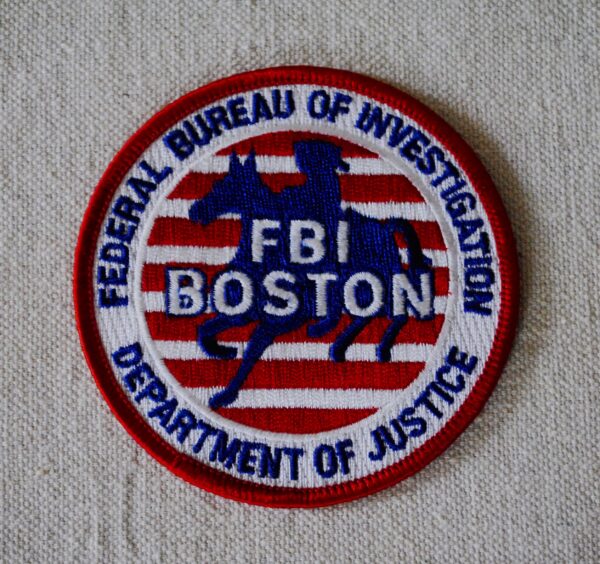
FBI Boston Patch
Early 21st century
Fabric and Plastic
This machine-made patch would have been attached to clothing in order to denote association with the Boston branch of the FBI during the early 21st century. Although the figure on this patch is only in silhouette, the tricorn hat and horse make him immediately recognizable as Paul Revere. Along with this patch, the FBI produced other merchandise featuring Revere– such as a pin and a magnet – which have also been acquired by the museum. This patch in particular was donated by a woman who worked for the Boston FBI. The Boston branch of the FBI has been operating in some capacity since around 1908, and was playing a major role in post-9/11 investigations around the time this patch was in use. The symbol of Paul Revere has been associated with heroism, communication, speed, reliability, and the colonial everyman, among a long list of other descriptors. Here, the Boston FBI uses the symbol of Revere as a representation of bravery as well as a reference to the city of Boston – sometimes his image is used to convey “hometown pride” alongside the patriotism that typically comes to mind when one thinks of Revere.
Donated by Liane McCarthy, 2006
Label by: Grace Harris
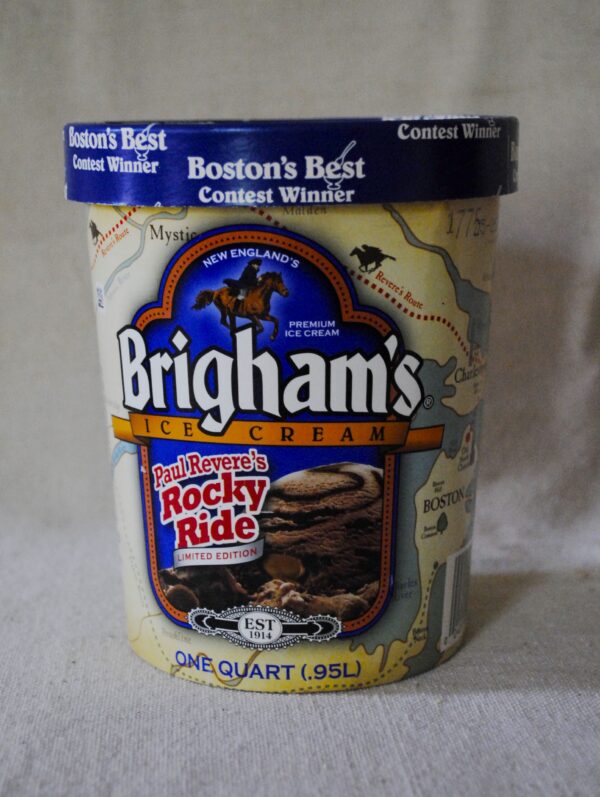
Paul Revere’s Rocky Ride Ice Cream by D.J. Mattson of Charlestown, MA
March 2009
Plastic-coated paperboard
For generations, Paul Revere has symbolized New England’s revolutionary past. In 2009, Brigham’s Ice Cream celebrated that legacy with Paul Revere’s Rocky Ride, winning the name in the “Boston’s Best” flavor ice cream contest. The chocolate ice cream features caramel-filled chocolate cups.
The one-quart container reflects both Brigham’s branding and Revere’s historical identity. A rider on horseback appears on the front, while the pale yellow background features a map of Boston tracing Revere’s route to Lexington. The back of the container features a brief description explaining the inspiration behind Paul Revere’s Rocky Ride. It begins by referencing the opening line of Henry Wadsworth Longfellow’s famous poem, “Listen, my children, and you shall hear….” The quotation reminds viewers that the ice cream celebrates not only Paul Revere himself, but also the literary image that helped make him an American icon.
By turning a revolutionary hero into an ice cream flavor, the package invites us to consider how everyday products play a role in history. Rather than existing only in monuments or museums, history can also live through ordinary objects, reminding us that the stories of the American Revolution continue to influence daily life in unexpected ways.
Donated July 2010
Label by: Amy Hou
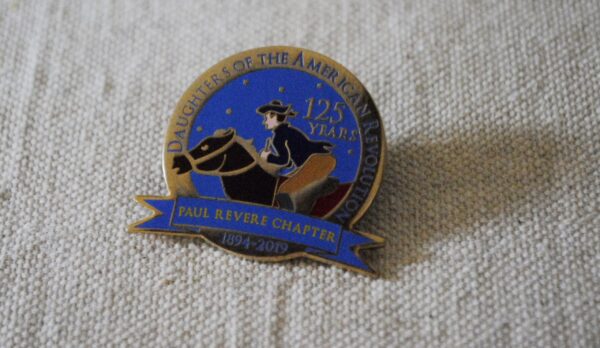
DAR Paul Revere Chapter – Commemorative Insignia
April 2019
The item shown here is a commemorative pin created as a symbol to recognize the Paul Revere Chapter’s 125th Anniversary in 2019. The DAR is an organization with over 3000 chapters that seeks to honor the bravery and courage of the American Revolution through community, leadership and service. The Daughters of the American Revolution (DAR) founded the Paul Revere Chapter of their movement in 1894 with a mission to spread the stories of the war and its heroes.
The members of the DAR are required to be women of direct lineal descent from a Patriot of the American Revolution. The DAR is not just an organization promoting national identity, but also empowering women directly connected to the people who fought for independence over 250 years ago. Even after being rejected from the Sons of the American Revolution, on October 11th, 1890 the DAR was established.
In 1954, the chapter won a national award for reporting the largest number of Revolutionary War soldier burial locations and the United States Senate officially published the information in their Documents. The DAR helped commemorate the Paul Revere House by funding the plaque near the door of the House, and raising funds for the restoration of the house by the Paul Revere Memorial Association, which is the organization that operates the Paul Revere House today.
Discussion question: How do the criteria to participate in the DAR impact their mission of promoting national identity?
Gift of Nina Zannieri, 2019
Label by: Vanya Singh
This exhibit features artifacts from our museum’s extensive collection of what we term “revereabilia” – artifacts created after Paul Revere’s lifetime which use Revere’s image and play a role in the creation of Paul Revere’s myth. Many of these artifacts were collected around our country’s bicentennial in 1976 when the 200th anniversary of the Declaration of Independence renewed interest in Paul Revere’s story, and in the past year, we have been excited to expand our collection to document how Revere’s legacy resonates at this current moment, on the 250th anniversary of American independence. Due to our museum’s limited exhibit space, we do not often have the opportunity to display most of this collection, so we are thankful to our wonderful interns for helping us share this small portion of it with you today!